
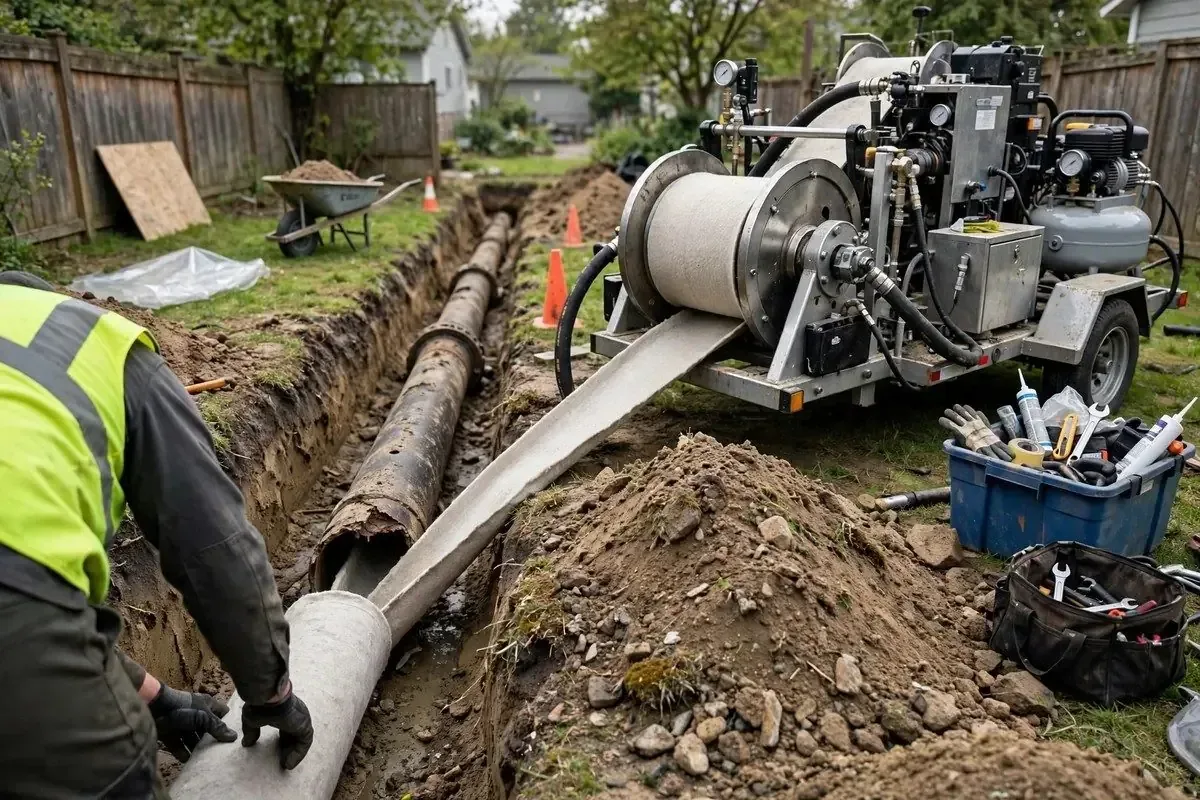
What sewer line repair includes
Sewer line repair is the fixing or replacement of the buried drain pipe between your house and the city sewer or septic tank. Depending on the damage, that can mean patching a short section, lining the pipe from the inside, or digging out and replacing the failed run.
A repair starts with a diagnosis. A camera inspection and a locator show where the defect is, how long it runs and what material the pipe is made of, and those facts decide the method and the price.
When a broken sewer line is an emergency
Treat it as urgent when sewage is backing into the house, when a sinkhole or a wet patch appears over the sewer path, or when several fixtures stop draining at once and a cable cannot clear them. The dispatch line is answered 24/7, including nights and weekends.
While you wait, stop using the plumbing. Do not flush or run the washer. If a section of the yard has collapsed, keep children and pets away from it and do not drive over the area.
We start with a camera pass or a cable pass so the repair plan rests on what is actually in the ground. Same-day appointments are offered when available, and a clear price comes before any digging.
Repair options compared
No method is best in every case. The right choice depends on pipe condition, depth, what sits above the line and cost.
| Method | Best for | Trade-off |
|---|---|---|
| Spot repair | One short defect such as a crack or a broken joint | Only fixes that section, and the rest of the pipe may be similar age |
| Pipe lining | Pipe that is cracked or rooted but still round and in line | Needs a clear pipe, and a collapsed or badly offset section cannot be lined |
| Pipe bursting | Replacing a long run with little surface digging | Needs entry and exit pits, and works best where the old pipe is a known path |
| Open trench replacement | Collapsed, offset or sagging pipe, or a path that is not straight | More digging and restoration, and often the most certain result |
A plumber who recommends a method should be able to show the footage that justifies it. If the footage does not support the method, ask for a second look.
Pipe lining, explained plainly
Pipe lining, sometimes called cured-in-place pipe, works like this. The plumber cleans the pipe, pulls a resin-soaked flexible liner through it and inflates the liner against the old pipe wall. The resin hardens into a new pipe inside the old one.
It avoids a long trench, which matters when the sewer runs under a driveway, a slab or an established oak. The limits are real, though. The liner follows the old pipe's shape, so a pipe with a major offset or a collapse is not a candidate, and the new inside diameter is slightly smaller than the old.
Local conditions that shape a repair here
Sandy Central Florida soil is easy to dig, but a high water table during the wet season can fill a trench within hours, which affects scheduling and the equipment needed. Plumbers plan sewer excavations for drier stretches when the problem allows.
Live oaks and laurel oaks are common over sewer paths in older Saint Cloud streets, and their roots can lift or crack a pipe. A repair that ignores the roots will fail again, so the plan often includes cutting or avoiding the root mass.
Permits matter on replacement jobs. Osceola County's permit page lists re-piping among the plumbing work that requires a permit, so ask the building department for your address whether a sewer replacement needs one.
What decides the price of a sewer repair
We quote after the camera work so the price reflects the actual defect:
- Length of damaged pipe. Eight feet of repair costs far less than a full lateral replacement.
- Depth. A pipe four feet down is easier to reach than one at eight feet.
- What sits above. Concrete, pavers, trees and utility lines all add work and restoration.
- Method. Lining, bursting and trench replacement each have their own labor and material mix.
- Permits and restoration. Permits where required, plus patching the yard or driveway, belong in the quote.
A sudden break caused by a covered event may be part of an insurance claim, though wear and tear usually is not, so ask your agent. For a written price, call (321) 463-9969.
Codes for sewer replacement
Replacement pipe must meet the Florida Building Code, Plumbing, and the plastic and cast iron materials used are made to ASTM standards. Osceola County's permit page lists re-piping as permit-required, so ask the building department for your address whether a sewer replacement counts.
Serving the whole Saint Cloud area
We repair sewer lines across 34769, 34771, 34772 and 34773 and into Kissimmee. If the pipe is merely clogged and not damaged, sewer line cleaning is the cheaper first step.
Questions we hear from Saint Cloud callers
Do you handle sewer line repair emergencies at night or on weekends in Saint Cloud?
Yes. The line is answered 24 hours a day. A dispatcher books the first open appointment for a sewage backup or a collapsed line, and the plumber begins with a camera or cable pass.
How do I know if my sewer line is broken?
Signs include repeated backups, gurgling in several drains, a sewage smell in the yard or garage, a soggy or sunken patch along the sewer path and lush grass over one strip. A camera inspection confirms it.
Is pipe lining as good as replacing the pipe?
For the right pipe, a liner gives a long-lasting, smooth new pipe without a long trench. It is not suitable for collapsed or badly offset pipe, and the footage tells you which case you have.
Can I repair my own sewer line?
Plumbing is a regulated trade in Florida. Osceola County's permit page says licensed subcontractors must be hired for plumbing, even when an owner acts as the builder. Hire a licensed plumber and verify the license at myfloridalicense.com.
How long does a sewer repair take?
A spot repair can take a day. A full replacement or a long liner can take longer. The plumber gives an estimate once the footage and the access are known.