
What drain cleaning means for a Saint Cloud household
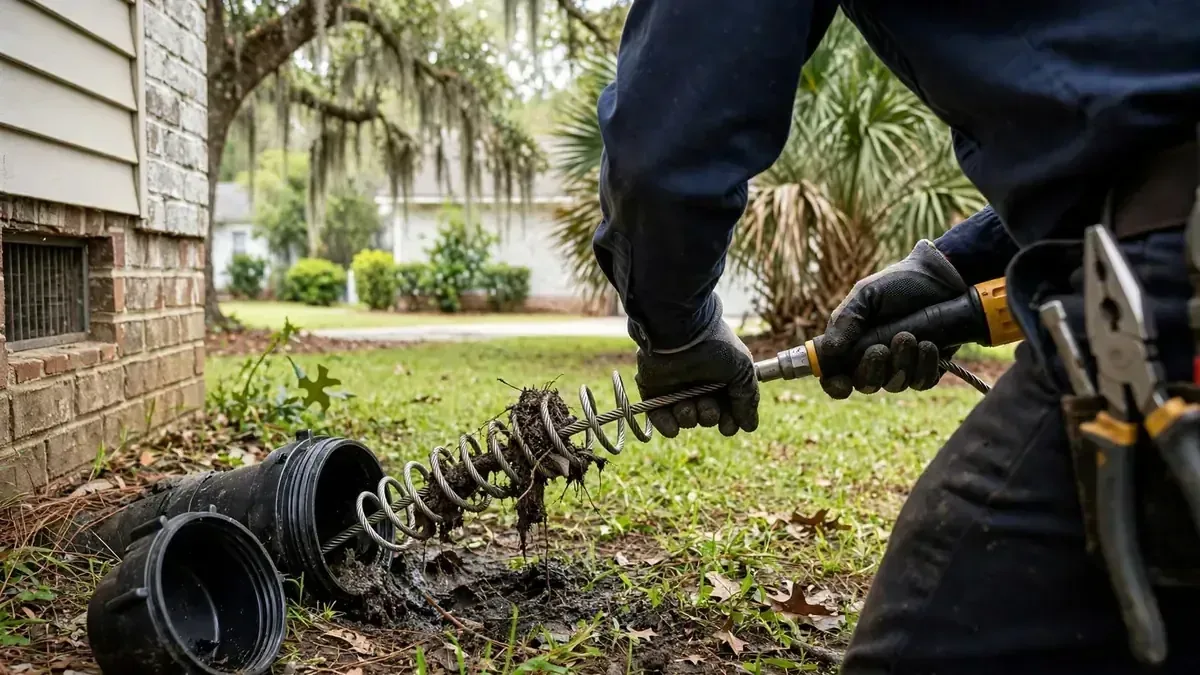
Drain cleaning is the removal of a blockage from a drain or sewer line so wastewater flows freely again. The work uses a cable machine, a high-pressure water jet or a camera-guided tool, depending on what is stuck and how far down the line it sits.
Most calls fall into two groups. A single sink, tub or shower that drains slowly points to a branch line near that fixture. Several fixtures gurgling or backing up together point to the main line, which is the pipe that carries everything from the house toward the street or the septic tank.
That split decides the tool, the time and the price, so the first thing we ask on the phone is which drains are affected and what the water does when you flush or run a load of laundry.
When a clogged drain is an emergency
Call at any hour if sewage is rising in a tub or shower, if a toilet will not stop overflowing, or if every drain in the house is slow at once. Those are signs the main line is blocked, and every flush or shower adds more water with nowhere to go.
A kitchen sink that drains slowly but still drains can usually wait for a same-day appointment. Overnight and weekend calls are answered the same way, and a dispatcher books the first open slot instead of leaving you with a voicemail.
While you wait, stop using the plumbing. Do not run the dishwasher or washer, skip the shower, and keep children and pets out of any standing water. Pouring chemical drain opener into a fully blocked line only adds a harsh liquid the plumber then has to work around.
Signs the blockage is in the main line
A quick walk around the house tells you a lot before anyone arrives. These patterns usually mean the blockage is past the individual fixture:
- The toilet gurgles or bubbles when the washing machine drains.
- The lowest drain in the house, often a floor drain, tub or ground-floor shower, backs up first.
- Water or sewage appears at the cleanout cap in the yard.
- Every fixture drains slowly, not just one sink.
- A sewage smell lingers near a floor drain or in the garage.
If you can find the cleanout cap in the yard, leave it closed and tell the dispatcher where it is. A plumber can open it and run a cable straight at the blockage without pulling a toilet.
Snaking, jetting and camera checks: how the work is done
For a typical sink or tub clog, a plumber feeds a hand or drum cable through the trap and into the branch line, then retrieves or breaks up the clog. Sink lines are small, so the cable is thin and the job is usually quick.
A main line is bigger and longer, so the plumber uses a drum machine with a heavier cable and a cutting head sized for the pipe. When the cable only punches a hole through grease or roots and the line fills again in a week, a water jet is the better tool because it scours the pipe wall.
After the line runs clear, a camera pass is worth asking for. It shows whether the clog was a one-off, such as a wad of wipes, or a sign of a cracked joint, a belly where the pipe sags, or roots entering at a seam. That answer tells you whether you are done or whether a full sewer camera inspection is the next step.
Symptom, likely location and usual fix
Use this table to match what you see with what a plumber is likely to do. It is a guide, and the camera has the final word.
| What you see | Likely location | Usual fix |
|---|---|---|
| One sink drains slowly | Trap or branch line under that sink | Hand cable or trap cleaning |
| Tub and shower both slow | Shared branch line near the bathroom | Drum cable, then a camera check |
| Toilet and floor drain back up together | Main line or the cleanout stretch | Main line machine, often a jet |
| Clog returns every few weeks | Roots, grease buildup or a sagging pipe | Hydro jetting plus a camera pass |
| Gurgling and a sewer smell with no backup yet | Partial blockage or vent problem | Cable the line, then inspect the vent |
Why drains in this part of Osceola County clog
Central Florida yards are full of live oaks, laurel oaks and palms, and their roots seek out the moisture around a sewer lateral. A joint that weeps even slightly invites a hair-thin root, and a year later that root is a mat that catches paper. If your clogs are recurring and your house has mature trees near the sewer path, roots are the first suspect.
Rain matters too. During the summer wet season the ground around buried pipe stays saturated for weeks, which exposes weak joints and makes a partial blockage show itself sooner. A line that coped all spring can back up in July.
Newer homes have their own pattern. In neighborhoods built in the last two decades, builder debris, wipes labeled flushable and kitchen grease are the usual culprits, and a cable usually clears them in one visit.
What decides the price of a drain cleaning visit
Every drain is different, so we quote after we know what we are dealing with. These are the factors that move the number:
- Which line. A fixture trap is the smallest job, a branch line is next, and the main line takes a bigger machine and more time.
- Access. A cleanout in the yard is fast. With no cleanout, the plumber may have to pull a toilet or work through a roof vent, which adds labor.
- Tool needed. A cable is the base visit. A water jet or a camera pass is an added service because the equipment is heavier.
- Cause. A wad of paper clears in minutes, while roots or a collapsed section keep going and may lead to a separate repair quote.
- After-hours timing. A night or weekend dispatch can be priced differently from a daytime appointment, and we tell you before the work starts.
Homeowner insurance often covers sudden, accidental water damage but usually not the cost of clearing a clog itself, so check your policy before you assume either way. For your real number on the phone, call (321) 463-9969 and describe what the drains are doing.
Kitchen sink clogs and drain line leaks
A kitchen sink clogs differently from a bathroom drain. Grease, coffee grounds and food scraps cool inside the pipe and build up into a soft plug, and the line often runs a long way before it meets the main. A cable can open it, but a jet leaves the wall cleaner, and a sink that has clogged more than once this year deserves the better tool.
Sometimes the water that disappears is not clogged at all. A drain line that leaks inside a wall or under a slab shows up as a damp cabinet, a smell or a floor that stays wet, and a camera pass tells you whether the line is broken. If clearing the drain does not stop the dampness, ask for the camera.
Codes behind drain work
Drain, waste and vent systems in Florida are governed by the Florida Building Code, Plumbing, which sets the standards for pipe sizes, slopes and venting that keep a line draining. A cleaning visit restores flow through that system and does not alter it, so it normally needs no permit under Osceola County's permit page.
Drain service across the Saint Cloud ZIP codes
Dispatch covers 34769 around Neptune Road, 34771 to the east, 34772 to the south and 34773 out toward Harmony. Service also reaches across the lake, so Kissimmee homeowners can book the same visit.
If the clog turns out to be a failing sewer pipe and not a one-time blockage, the next step is usually sewer line repair, and a plumber will show you the camera footage before recommending it.
Questions we hear from Saint Cloud callers
Do you handle drain cleaning emergencies at night or on weekends in Saint Cloud?
Yes. The line is staffed 24 hours a day, and a dispatcher books the first open appointment for sewage backups, overflowing toilets and whole-house slow drains, including nights and weekends.
Tell the dispatcher which fixtures are affected and whether water is rising. Do not run any more water while you wait.
How do I know whether the clog is in one fixture or the main line?
If only one sink or tub is slow and the rest of the house drains normally, the clog is in that fixture's branch line. If a toilet gurgles when the washer drains, or the lowest drain backs up first, the main line is the likely location.
Will chemical drain cleaner fix it?
It can dissolve a light hair or soap film clog, but it does not touch roots, collapsed pipe or a solid wad of wipes. In a fully blocked line it sits in standing water, so the plumber has to deal with a caustic liquid. Skip it for anything that has stopped draining.
How long does drain cleaning usually take?
A single fixture often takes under an hour. A main line with roots or heavy grease can take longer, especially if a jet pass and a camera check are added. The plumber tells you what to expect once the cable is in the line.
Can a clogged drain come back after cleaning?
Yes, if the cause is still there. Roots, grease buildup and a sagging pipe section all let the clog return. A camera pass after cleaning shows which of these you have, so the repair addresses the cause and not just the blockage.
Do I need a permit for drain cleaning in Osceola County?
Osceola County's permit page lists clearing sewer blockages as work that does not require a permit. If a blockage leads to a pipe replacement, that is a different job, so ask the building department that covers your address.