
What a good installation includes
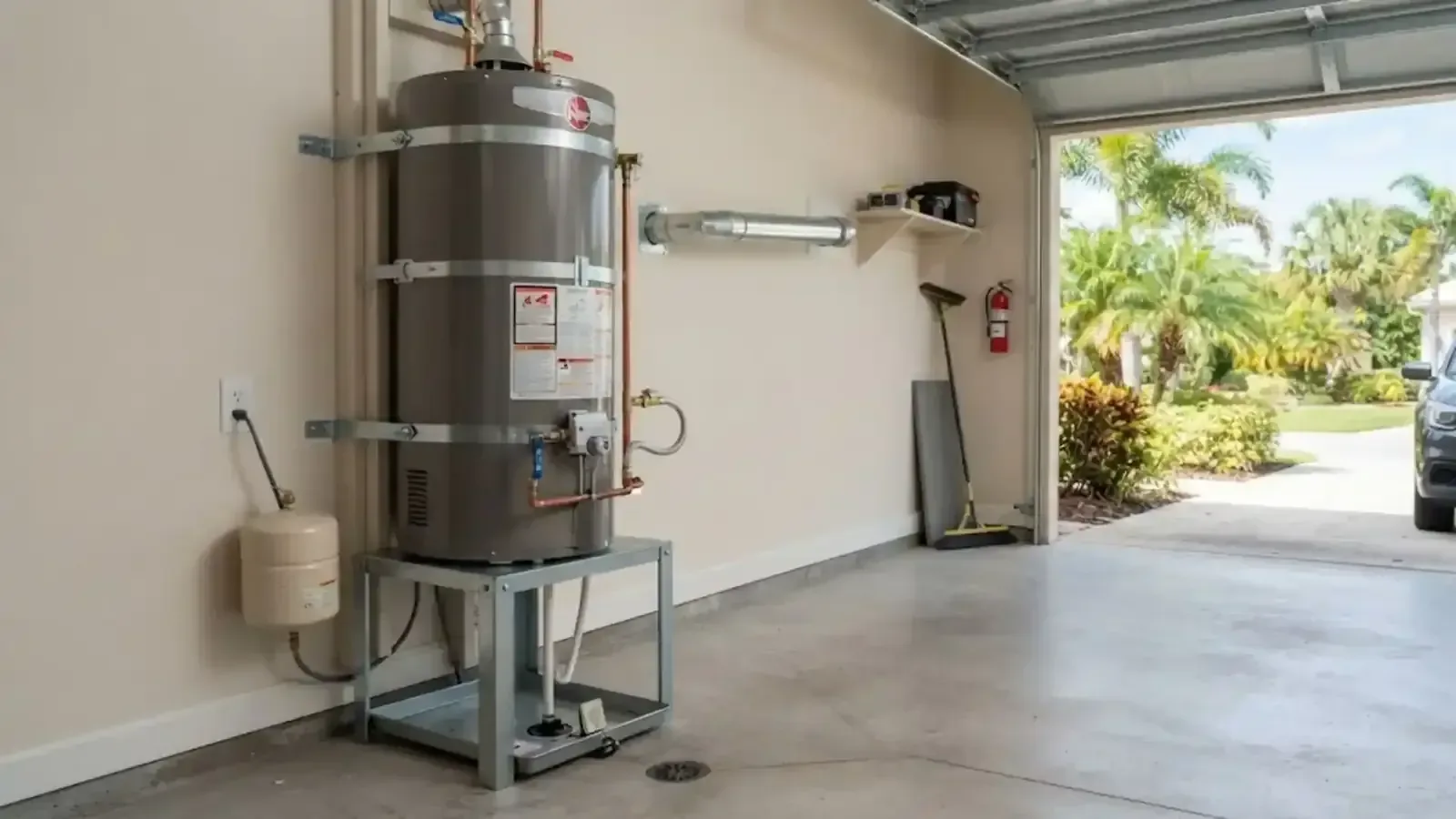
Water heater installation sets a new heater in a safe location and connects the water, power or gas and venting so it runs to the manufacturer's instructions and local code. A proper job covers the heater, the shutoff valve, flexible connectors, a relief valve with a discharge line, a drain pan where the location calls for one, and an expansion tank when the plumbing system needs it.
The installer should test the system before leaving, set the temperature and walk you through the shutoff valve and the relief valve. That handover is part of the work.
Fuel and type compared
The first decision is the type. Here is how the main options line up for a Central Florida home.
| Type | How it works | Needs |
|---|---|---|
| Electric tank | Heating elements warm the stored water | A dedicated 240 volt circuit sized for the unit |
| Gas or propane tank | A burner under the tank heats the water | A gas line, venting and combustion air |
| Hybrid heat pump tank | A heat pump pulls warmth from the surrounding air, with elements as backup | Open air space, a condensate drain and a nearby outlet |
| Tankless gas or electric | Heats water as it flows, with no storage | Large gas line or heavy electrical circuits, plus venting for gas |
A hybrid heat pump unit cools and dries the air around it, which is welcome in a hot garage and a poor fit for a tight closet. Ask the installer to check clearances before you commit.
Where the heater goes
Central Florida homes sit on slabs, so heaters live in garages, utility closets or attics. Each has trade-offs. A garage is easy to service but exposes the unit to stored items and dust. An attic keeps the floor clear but can ruin a ceiling if the tank leaks.
Whatever the location, it needs room to service, a drain pan with a pipe that carries water out and a clear route for the relief valve discharge. Manufacturer instructions and local code set the clearances, so the installer follows them.
How installation day runs
The same order of work applies in most homes.
- The plumber confirms the location, fuel and electrical or gas readiness.
- The old unit, if there is one, is drained, disconnected and removed.
- The new heater is set on a stand or in a pan, and water connections go on.
- Electrical, gas or heat pump connections are made and checked for leaks.
- The relief valve discharge, expansion tank and venting are installed and checked.
- The tank is filled, purged of air and tested, and the temperature is set.
A permit, where it applies, covers an inspection after the work. Osceola County's permit page lists water heaters as permit-required work, so ask the building office that covers your address.
Sizing and energy choices
Size follows demand. A household of two with one bathroom needs less stored hot water than a family of five with three bathrooms and a soaking tub. The first-hour rating on the heater's label tells you how much hot water it delivers in an hour of peak use, and that number matters more than the tank size alone.
Energy choices matter on a Florida utility bill. A hybrid heat pump heater uses electricity to move heat and not to create it, which typically means lower electric use than a resistance tank, and it needs a ventilated place to work.
What decides the price of an installation
Installation quotes vary because homes vary. These are the inputs we price:
- Unit and size. A basic electric tank costs less than a hybrid or a tankless unit.
- Location work. Moving a heater, adding a stand or running new lines adds labor.
- Electrical or gas work. A new circuit, a larger gas line or new venting is a separate line item.
- Required parts. Expansion tank, pan, relief line, valves and connectors.
- Permit and inspection. Where a permit applies, we include it in the written quote.
A new heater is a planned expense, and insurance does not usually cover the cost. To get your quote, call (321) 463-9969 with your fuel type and the heater's location.
Standards for a new install
New installations follow the Florida Building Code, Plumbing for the relief valve, drain pan and discharge, NFPA 54 for gas connections and the NEC for power. Federal efficiency standards set the minimum rating for the model, and a permit applies under Osceola County's permit page.
Next steps
If your current heater is already leaking, read about water heater replacement. For an on-demand model, see our tankless page. We install across Harmony and the Saint Cloud ZIP codes 34769, 34771, 34772 and 34773.
Questions we hear from Saint Cloud callers
Can I install a water heater myself?
Florida requires plumbing work to be done by a licensed plumber, and Osceola County's permit page lists water heaters as permit-required work. Hire a licensed plumber and check the license at myfloridalicense.com.
How long does a water heater installation take?
A tank swap often takes a few hours. A new location, a new electrical circuit or a conversion to tankless takes longer, and the plumber gives a plan before starting.
Is a heat pump water heater a good fit for Florida?
It can be. Heat pump heaters pull warmth from the surrounding air, so a warm garage is a good place. They need open air space and a drain for condensation, so ask the installer about your location.
Do you handle water heater emergencies at night?
Yes. The line is answered 24 hours a day. A failed or leaking tank is an emergency and gets the first open appointment, while a planned installation is booked at a time you choose.
What does an expansion tank do?
When water heats it expands, and in a closed plumbing system that extra volume has nowhere to go. An expansion tank gives it room, which protects fixtures and the relief valve from repeated pressure spikes.