
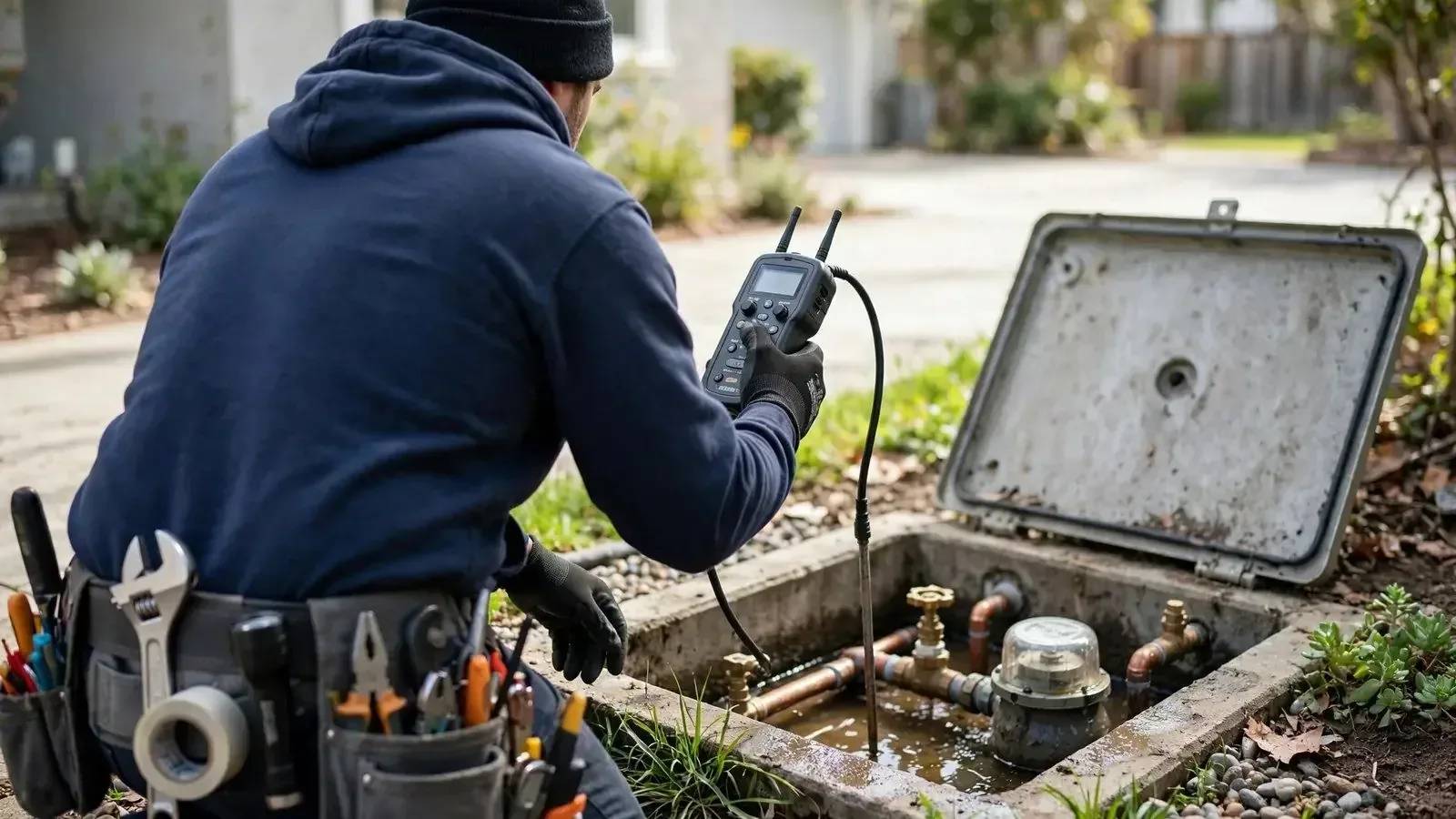
What leak detection is
Leak detection is the use of non-invasive tools to find where water is escaping from a pipe without tearing out walls or floors first. The tools include acoustic listening devices, thermal cameras, moisture meters, pressure tests and tracer gas.
The aim is to give the repair a target. A plumber who knows the leak is under the kitchen island, two feet from the sink, can open a small hole and fix it, instead of opening a whole room and hoping.
When a hidden leak is an emergency
Call at any hour if you hear water running with every fixture off, if the meter keeps spinning, if the floor is warm or soaked in one spot, or if water is visible and spreading. We answer 24/7 and book the first open appointment, including nights and weekends.
Find your main shutoff valve, usually at the meter box or near the front of the house, and close it. If the water stops, you have bought time. Then move belongings off wet floors and take photos for insurance.
A same-day appointment is offered when available, and an after-hours visit is priced as stated before the work starts.
Check your own water meter first
This test costs nothing and tells you whether a leak exists on the property side of the meter. Take five minutes to run it.
- Turn off every faucet, appliance and the ice maker, and make sure nobody flushes.
- Open the meter box and look at the dial or the small low-flow indicator, often a triangle or star that spins when any water moves.
- If the indicator moves with everything off, water is leaking somewhere after the meter.
- Note the reading, wait fifteen minutes with nothing running, and check again.
- Close the main shutoff valve at the house and look at the meter once more. If it still moves, the leak is between the meter and the valve.
A toilet that runs silently is the most common false alarm. Put a few drops of food coloring in the tank, wait fifteen minutes without flushing, and see whether color reaches the bowl.
Tools used and what each finds
A plumber picks tools by the clue, not by habit.
| Tool | What it detects | Best for |
|---|---|---|
| Acoustic listening device | The sound of water escaping a pressurized pipe | Slab leaks and buried lines |
| Thermal camera | Temperature differences from hot leaks or wet materials | Hot water lines and wet walls |
| Moisture meter | Dampness in drywall, wood and subfloor | Finding the edges of a wet area |
| Pressure test | Whether the system holds pressure | Confirming a leak exists |
| Tracer gas | Gas escaping through a pipe defect | Hard-to-find small leaks |
Equipment narrows the search, and a good technician combines readings. A leak noise heard through a slab plus a warm spot on a thermal image is stronger evidence than either alone.
High bills and the Saint Cloud water supply
A water bill that jumps without a change in habits is one of the most common reasons homeowners call. A running toilet, a dripping irrigation valve or a leaking line to the water heater can each add thousands of gallons a month without any visible puddle.
Saint Cloud's water comes through Toho Water Authority, and your bill and meter history come from them. Compare the last six months of usage, then check the meter at a quiet time of day as described above. If usage rose when nothing in the house changed, a leak is likely.
Irrigation is a Florida specialty. A sprinkler zone valve stuck partly open can run for hours after the timer says stop, and the water goes into the lawn where you never see it. Include the irrigation system in the check.
What decides the price of leak detection
Detection is priced by the scope of the search:
- Property size. A small house is quicker than a large one with several bathrooms.
- Clues available. A known wet spot narrows the search. A silent bill spike takes longer.
- Tools needed. Acoustic, thermal and gas methods can be combined.
- Access. Finished floors and cabinets can limit where tools reach.
- Repair afterward. Finding the leak is one step, and the fix is quoted separately.
Insurance may help with damage from a sudden leak, and some policies cover the cost of finding the source, so ask your agent. To book a visit, call (321) 463-9969.
Ceiling, wall and attic leaks
A stain on a ceiling or a damp patch on a wall is a symptom, and the source is often somewhere else. Water travels along framing and pipes before it shows itself, so the wet spot may sit several feet from the failure. A plumber uses a moisture meter and a thermal camera to trace the path back, and listens at the pipes with an acoustic device.
Attic leaks add a second possibility. The water may come from a supply line, an air handler drain or the roof, and only one of those is a plumbing job. A good visit rules out the plumbing first and tells you honestly when the cause is somewhere else.
Under-house, crawlspace and buried-line leaks
Many Florida homes sit on a slab, but some have a crawlspace or raised floor, and a leak under one can run for weeks before a smell or a soft floor gives it away. If you can see the underside safely, look for dripping, wet insulation and mold. If you cannot, a camera and moisture readings can show it without anyone crawling in.
Buried lines are harder. A leak between the meter and the house, or in a yard line to a pool or shed, may show up only as a wet patch of lawn, a drop in pressure or a meter that never stops. Acoustic listening on the line and a pressure test locate it so the dig is small.
Pool and spa lines are a separate case. If your pool loses water faster than evaporation explains, tell the dispatcher, because the pool equipment and its plumbing need their own check.
A source for the cost of leaks
According to the U.S. Environmental Protection Agency, household leaks can waste nearly 10,000 gallons of water in a year, which is why its WaterSense program promotes finding and fixing them. Detection tools such as acoustic listening devices and thermal cameras narrow the search before any repair.
What to do while you suspect a hidden leak
You do not need to tear anything open to start. These steps help the visit:
- Shut off all fixtures and note whether the water meter still moves.
- Check for warm spots on the floor, damp baseboards and the smell of mildew.
- Keep power off near any wet area, and do not drill or cut into a wall to look.
- Write down the dates of unusually high bills to share with the plumber.
What happens after we find it
A slab leak calls for a repair or a reroute, covered in our slab leak page. A leak on the buried line from the meter to the house is a water service line repair. A burst section in a wall is covered by burst pipe repair.
We find leaks across 34769, 34771, 34772 and 34773, and in Kissimmee.
Questions we hear from Saint Cloud callers
Do you handle leak detection emergencies at night or on weekends in Saint Cloud?
Yes. The line is answered around the clock. If water is flowing or damage is spreading, tell the dispatcher and shut off the main valve. We book the first open appointment.
How do I know if I have a hidden leak?
Common signs are a rising water bill, a meter that moves with all fixtures off, a hissing sound, a warm spot on the floor, musty smells or damp drywall. The meter test above is the fastest check.
Can a leak be found without breaking the floor?
In most cases yes. Acoustic and thermal tools narrow the leak to a small area, and the plumber opens only the spot that needs it.
Will my insurance cover a hidden leak?
It depends on the policy. Many cover sudden accidental water damage but not long-term seepage, and some cover the cost of finding the leak. Photograph the damage and ask your agent before repairs.
Does a repair of a leak need a permit?
Osceola County's permit page lists repairing leaks as not requiring a permit. Replacing pipe or re-piping does, so ask the building department that covers your address if the job grows.