
What a slab leak is
A slab leak is a break or pinhole in a pressurized water line that runs beneath or inside a home's concrete foundation slab. Most Central Florida houses are built on slabs, so supply lines in older homes often run through or under the concrete before surfacing at fixtures.
The leak does not always flood a room. Water can soak into the soil under the slab, run along the pipe trench or lift the floor above, and the first sign may be a bill that has climbed.
When a slab leak is an emergency
Call at any hour if you hear a hiss or running water under the floor with every fixture off, if a section of floor is warm or wet, or if the meter spins with everything closed. The dispatch line is answered 24/7, including nights and weekends.
Close the main water valve to stop the leak, and open a faucet to relieve pressure if the plumber asks. Without water to the house you still have toilets by pouring a bucket into the bowl, so use that for a day if needed.
Photograph the damage before you move anything. A same-day appointment is offered when available, and the price is stated before the work starts.
Signs of a slab leak
Slab leaks give mixed signals, and several together raise the odds:
- A hissing or trickling sound with all fixtures off.
- A warm spot on the floor, which points to a hot water line.
- Damp or discolored carpet, grout lines or baseboards with no plumbing nearby.
- A sudden rise in the water bill without a change in use.
- Low water pressure at several fixtures.
- Cracks in tile or walls, or a musty smell with no visible source.
None of these proves a slab leak. A leak in a wall, an attic line or a running toilet can look the same, which is why the next step is detection and not demolition.
How we pinpoint it
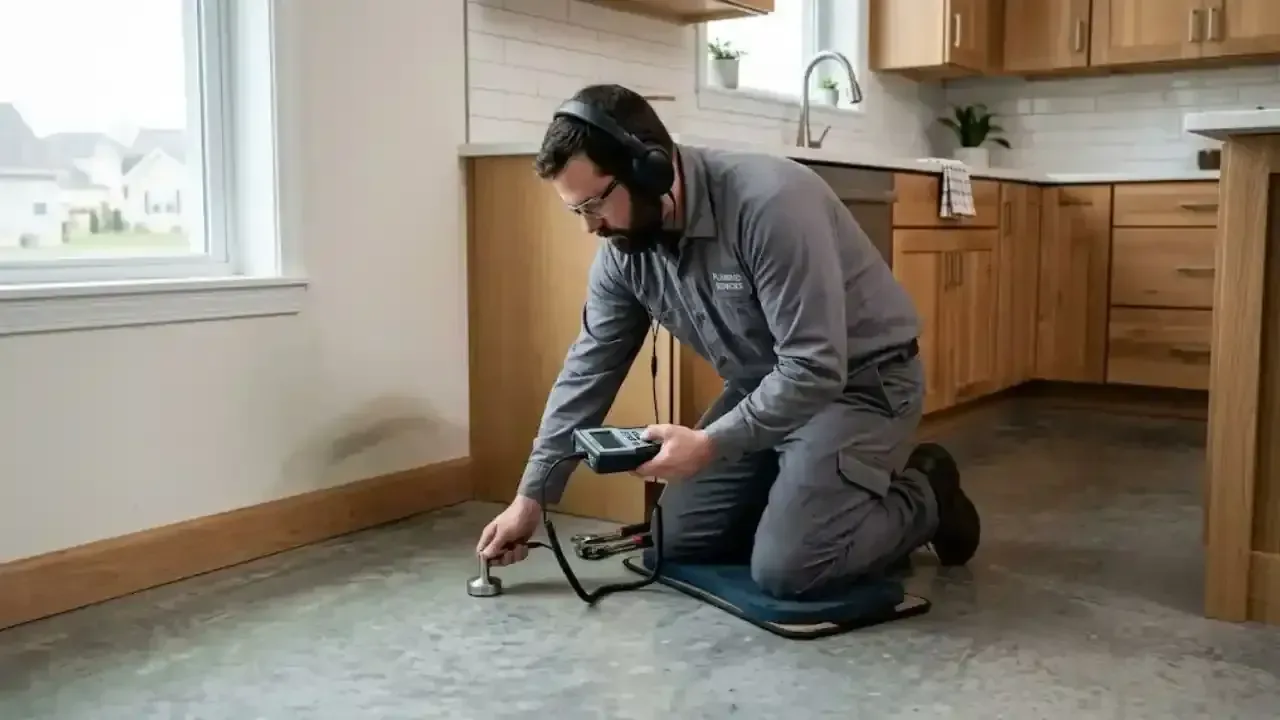
The plumber starts with a pressure test, isolating the hot and cold lines to learn which side is losing pressure. An acoustic listening device then traces the sound along the floor, and a thermal camera can show warm spots from hot lines.
When the equipment agrees on a location, the plumber marks it on the floor. That mark guides the repair, so the opening is a small patch of tile and concrete and not a wide trench.
Repair options for a slab leak
The right fix depends on how many leaks the pipe has, where it runs and how old the system is.
| Option | How it works | Consider when |
|---|---|---|
| Spot repair | Open the slab at the leak, replace a short section | A single leak, in an accessible spot, in otherwise sound pipe |
| Reroute | Abandon the slab line and run new pipe through the attic or walls | Repeated leaks in the same line or hard-to-reach routes |
| Epoxy lining | Coat the inside of the line to seal it | Where the pipe is intact, and a plumber confirms it suits the material |
| Repipe | Replace the whole system | Pipe is failing in several places |
Slab repair is a trade-off between cost now and the chance of another leak later. If the plumber finds one pinhole in corroded copper, ask how likely the rest of the line is to follow, and see the repiping page if the answer is not reassuring.
Slab leaks around Saint Cloud and Harmony
Saint Cloud's housing has grown quickly, but older slab homes in the original neighborhoods are where supply lines have had the most time to wear. Homes in Harmony date from the early 2000s onward, so a slab leak there more often points to a fitting or a pressure issue than to old pipe.
Permits matter on bigger jobs. Osceola County's permit page lists re-piping as permit-required plumbing work, though it lists repairing leaks as not requiring a permit. A reroute may count as re-piping, so ask the building department that covers your address.
Codes for slab repairs
Repairs under a slab follow the Florida Building Code, Plumbing, and a replacement or reroute is treated as re-piping on Osceola County's permit page. Pressure testing after the work is the standard way to confirm the line holds.
What decides the price of a slab leak repair
We give a written price once the leak is located:
- Detection. Finding the leak is its own step and is quoted first.
- Repair method. A spot repair, reroute or epoxy each carry a different cost.
- Floor finish. Tile, wood and carpet over the slab affect the restoration cost.
- Number of leaks. More than one leak often tilts the choice toward a reroute.
- Permit and restoration. A permit where required, plus patching concrete and flooring.
Insurance may cover sudden accidental damage but not always the slab work, so ask your agent and keep photos. For a price, call (321) 463-9969.
Questions we hear from Saint Cloud callers
Do you handle slab leak emergencies at night or on weekends in Saint Cloud?
Yes. The line is answered 24 hours a day. Tell the dispatcher what you hear or see, shut off the main valve and we book the first open appointment.
How do you find a slab leak without jackhammering the whole floor?
We use a pressure test, acoustic listening and thermal imaging to narrow the leak to a small area. The opening is limited to the spot where the equipment agrees.
Can a slab leak damage my foundation?
A long-running leak can wash out soil under the slab and cause settlement or cracks. Fix a known leak promptly. If you already see cracks, mention them to the plumber.
Is it better to reroute the pipe or fix the leak in the slab?
A spot repair is cheaper now. A reroute avoids the slab and tends to suit repeated leaks. The plumber can explain which makes sense once the line's condition is known.
How do I know the leak is under the slab and not in a wall?
A hot or wet floor spot with no plumbing above it points to the slab. A wet wall or ceiling points elsewhere. Detection equipment confirms the location.