
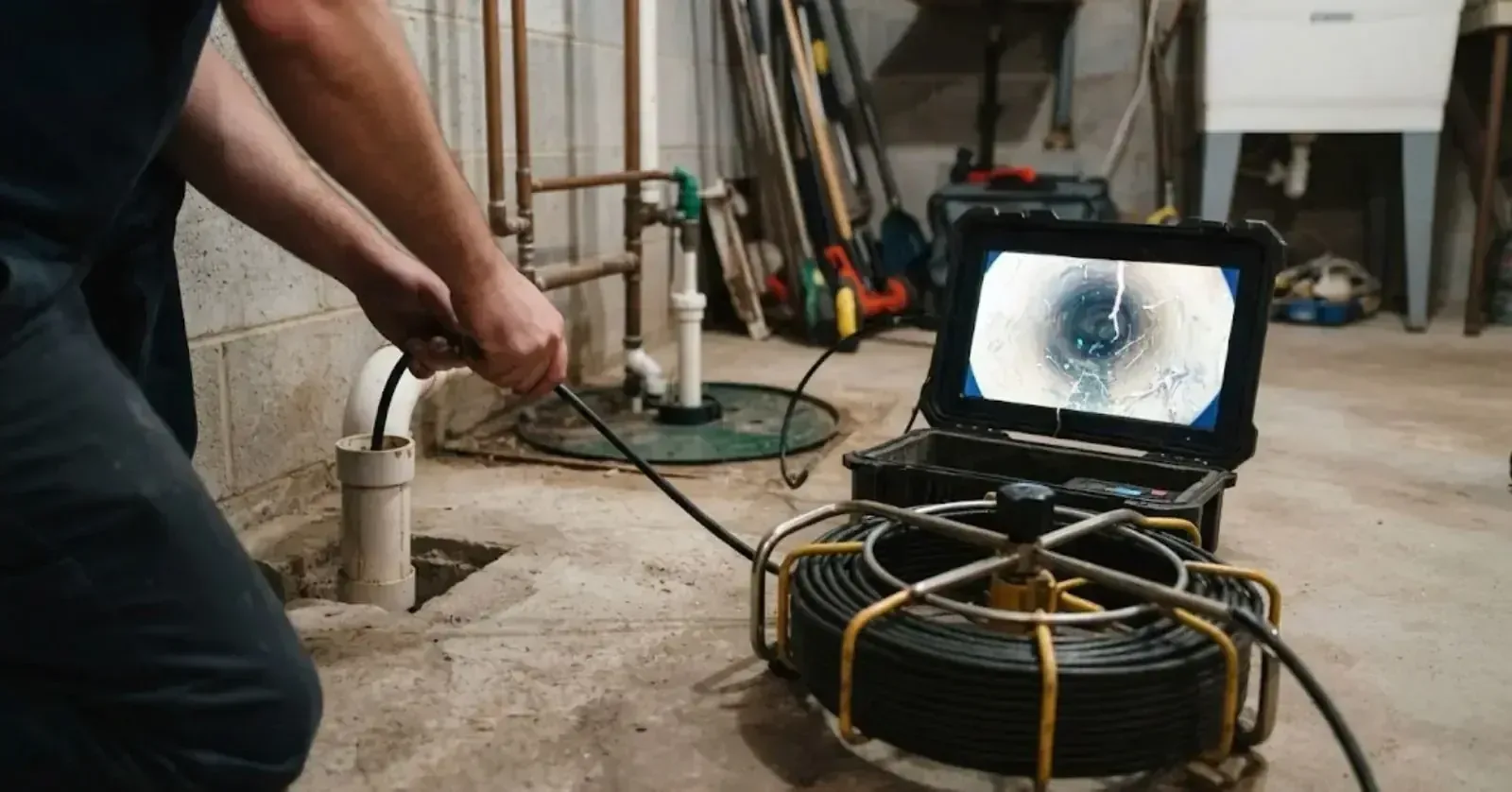
What a sewer camera inspection shows
A sewer camera inspection is a video look inside your drain and sewer line, using a small waterproof camera on a flexible cable. The plumber feeds it through a cleanout, sees the pipe wall on a monitor and records the run so you can review it afterward.
It answers questions a cable machine never can. Is the pipe cracked or crushed? Is a joint offset so wastewater snags? Is there a belly where waste pools? Are roots entering at a seam, and how bad is it?
When a camera inspection is worth the visit
These are the situations where the footage pays for itself:
- You are buying a home, especially one built before the 1980s or with large trees over the sewer path.
- A drain has backed up more than once in a year.
- A cable cleared the line but the problem came back.
- You see a soggy, sunken patch in the yard along the sewer path.
- You plan a remodel, a new bathroom or a driveway pour over buried pipe.
- An insurer or a contractor asks for proof of the pipe's condition.
If you have recurring clogs, a camera pass after a cleaning is the fastest way to learn whether the cause is a pipe defect or a one-time blockage.
How the inspection goes
A residential inspection follows a predictable path.
- The plumber finds the cleanout, or removes a toilet or opens a roof vent if there is none.
- A cleaning pass clears debris so the lens has a clear view, if the line needs it.
- The camera runs from the access point toward the street or septic tank, with the plumber narrating what shows on the monitor.
- A locator on the camera head lets the plumber mark the surface above any defect, so a repair can be planned around real depths and distances.
- You get the footage and a plain description of each defect, along with the options and the price for each.
What the footage can show and what it means
These findings come up often.
| Finding | What it means | Typical next step |
|---|---|---|
| Fine roots at a joint | A seam is leaking enough to attract roots | Jetting now, joint repair if it keeps returning |
| Offset joint | Two pipe sections no longer line up | Spot repair or a section replacement |
| Belly or low spot | Fill settled under the pipe | Monitor, or replace the sagging section |
| Longitudinal crack | Pipe wall has failed along its length | Lining or replacement, depending on extent |
| Scale or heavy corrosion | Older iron pipe is closing in | Jetting, then a plan for replacement |
A clear camera result is also useful. It tells you the line is sound, which can calm a home purchase or end a guessing game about a recurring clog.
Inspection before repair: why it saves money
The most expensive mistake in sewer work is digging in the wrong place. Footage plus a surface locator tells the plumber exactly where a defect sits and how deep it is, which cuts the excavation to the length of pipe that needs work. That is the difference between replacing eight feet and replacing eighty.
If the footage shows a defect, the next page to read is sewer line repair. If it shows only buildup, hydro jetting may be all you need.
Home buyers in Saint Cloud and Kissimmee
Saint Cloud and Kissimmee both have homes from many eras, and a general home inspection usually does not include a camera run through the sewer line. If the house you are buying has mature trees over the sewer path, a camera inspection is cheap insurance against a surprise repair after closing.
Ask for the footage in a form you can share with your agent. A written description of each defect with its position along the line is what lets you negotiate a repair or a credit.
How inspection footage is coded
Pipeline inspectors commonly code defects such as cracks, roots and offsets using the NASSCO Pipeline Assessment Certification Program, a recognized industry standard. Ask whether your plumber's report follows a coding standard, because consistent labels make a repair quote easier to compare.
What decides the price of an inspection
A camera inspection is priced before we start, based on these factors:
- Access. A cleanout in the yard makes the job straightforward. Pulling a toilet adds labor.
- Line length. A short lateral is quick, and a long run takes more time.
- Cleaning needed first. If the line has a blockage, it must be cleared so the lens can see.
- Locating. Marking a defect's position on the surface is an added step worth requesting.
- Report. A written summary and a copy of the footage are what make the inspection useful for a purchase or a claim.
Home insurance rarely pays for an inspection by itself, but the footage can support a claim if a covered event damaged the pipe. To book an inspection, call (321) 463-9969.
Questions we hear from Saint Cloud callers
How long does a sewer camera inspection take?
A typical residential line takes under an hour once the camera is in. If the line needs cleaning first or has no accessible cleanout, plan for longer.
Do I get a copy of the video?
Ask for it when you book. Footage is the main reason to pay for an inspection, and you should be able to keep it and share it with a contractor, an insurer or a home purchase agent.
Can a camera inspection find a leak?
It can show a cracked pipe or a joint that is weeping, and a locator marks where it sits. It does not find leaks in pressurized supply lines, which is a job for leak detection equipment.
Will the camera damage my pipe?
No. The camera head is small and flexible and designed to move through a pipe without force. If the line is fully blocked, the plumber clears it first.
Is the inspection useful if my drains work fine?
Yes, especially before buying a house or a remodel. A pipe can have cracks or roots long before it backs up, and finding them early is cheaper than an emergency dig.