
What plumbing installation covers
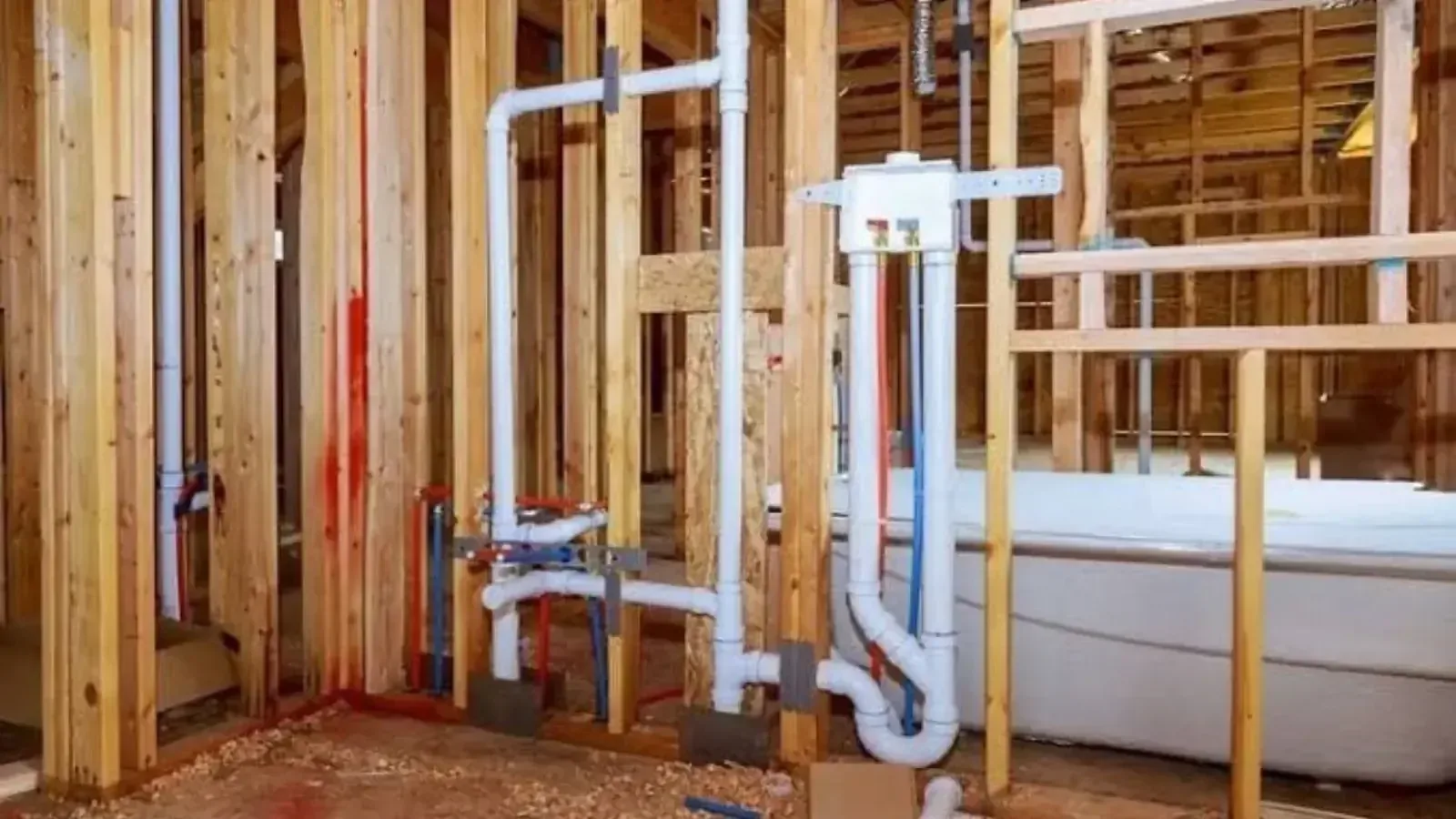
Plumbing installation is the design and installation of the water supply lines, drains and vents that serve a building's fixtures. In a remodel it can mean adding a bathroom, moving a kitchen sink, setting a new tub or roughing in a laundry room.
It has two stages. Rough-in puts the pipes inside the walls and floors before drywall goes up. Trim-out sets fixtures and faucets after finishes are done. Inspections usually happen between the stages.
Typical installation projects and what they need
Different projects call for different pipe work.
| Project | Plumbing work | Often needs |
|---|---|---|
| New bathroom | Supply lines, drain, vent, fixtures | A permit and rough-in inspection |
| Kitchen remodel | Sink, dishwasher and disposal connections | Moving drains and venting if the sink moves |
| Laundry room | Washer box, drain standpipe | A drain sized for the washer's flow |
| Outdoor kitchen or hose bibs | Water and sometimes drain lines | Freeze and backflow protection |
| Garage or ADU | Supply, drain and water heater | Connection to the main sewer |
Osceola County's permit page lists new and replacement fixtures among permit-required plumbing work. Ask the building department that covers your address which permits and inspections apply.
Why a remodel's plumbing should be planned early
A drain needs slope, usually a quarter inch per foot, and a vent. That means you cannot move a toilet or a sink anywhere you like on a slab, because the new drain must tie back to the existing line at the right depth. Moving a fixture on a slab can mean cutting and re-pouring concrete.
Plan the layout with the plumber before you order tile or cabinets. A small shift in a vanity location may save a day of concrete work. Bring the floor plan and the fixture specifications to the first meeting.
How a plumbing installation runs
The sequence is much the same for most projects.
- A plumber walks the site, reviews the plans and confirms fixtures and locations.
- A written price and a permit application follow.
- Rough-in pipes go in before walls close.
- The inspector checks the rough-in work.
- After finishes, the plumber sets fixtures, connects them and tests every one.
- The final inspection closes the permit.
Ask the plumber who is responsible for what. Fixtures supplied by the owner need to be on site before the plumber sets them.
Growth in Saint Cloud and Harmony
Saint Cloud's population has grown to roughly 75,000, and new subdivisions keep adding homes. Harmony began as a planned community that Osceola County first approved in 1992 for up to 7,200 residential units, and residents began moving in around 2003.
New homes bring their own plumbing questions. Builder-grade fixtures wear out sooner than they should, so a homeowner often replaces them after a few years, and add-on projects such as a bathroom or an outdoor kitchen are common after move-in. Our Harmony page covers service in that community.
What decides the price of an installation
We price after seeing the project:
- Scope. A single fixture swap is smaller than a new bathroom.
- Floor type. Slab work is harder than crawlspace or second-floor work.
- Distance to existing lines. A longer run costs more pipe and labor.
- Fixtures and finish. Fixture choices, whether owner-supplied or from us.
- Permit and inspection. Fees and inspection coordination belong in the quote.
Insurance does not cover planned installs. To get a price, call (321) 463-9969 and describe the project.
New construction and additions
A new build or a major addition puts plumbing in at stages. The rough-in comes before walls close, and the finish work comes at the end, with inspections in between. Planning the fixture locations early keeps the drain and vent runs short and the walls the right depth.
If you are building, tell the plumber when the framing will be ready and who coordinates the inspections. A builder who has a plumber on call can adjust to changes, and an owner who handles it alone should confirm with the building department which stages need an inspection.
Code framework for new work
New plumbing is designed and inspected against the Florida Building Code, Plumbing, which sets the standards for fixtures, venting, drains and water supply. Osceola County's permit page lists new fixtures and re-piping as permit-required work.
Related services
If your project includes a new water heater, see water heater installation. If it includes a new toilet or sink, our toilet page and faucet page cover those fixtures. We serve Kissimmee and the Saint Cloud ZIP codes 34769, 34771, 34772 and 34773.
Questions we hear from Saint Cloud callers
Do I need a permit for plumbing installation in Osceola County?
Osceola County's permit page lists new and replacement fixtures, water heaters and re-piping as permit-required. Ask the building department that covers your address for details.
Can I move a toilet or sink in a slab house?
Yes, but it may mean cutting the slab to re-route the drain. Moving a fixture a short distance is often easier than a long move.
How long does a bathroom plumbing rough-in take?
A typical bathroom rough-in takes a day or two. A new bathroom on a slab takes longer because of the concrete work. The plumber gives an estimate after seeing the plan.
Should I buy my own fixtures?
It is your choice. If you supply fixtures, they need to meet code and be on site before the plumber sets them. Many plumbers can supply fixtures and stand behind the install.
Do you handle plumbing emergencies as well as installations?
Yes. The 24/7 line answers day and night for leaks, backups and failed heaters. Installations are scheduled at a time that suits you.