
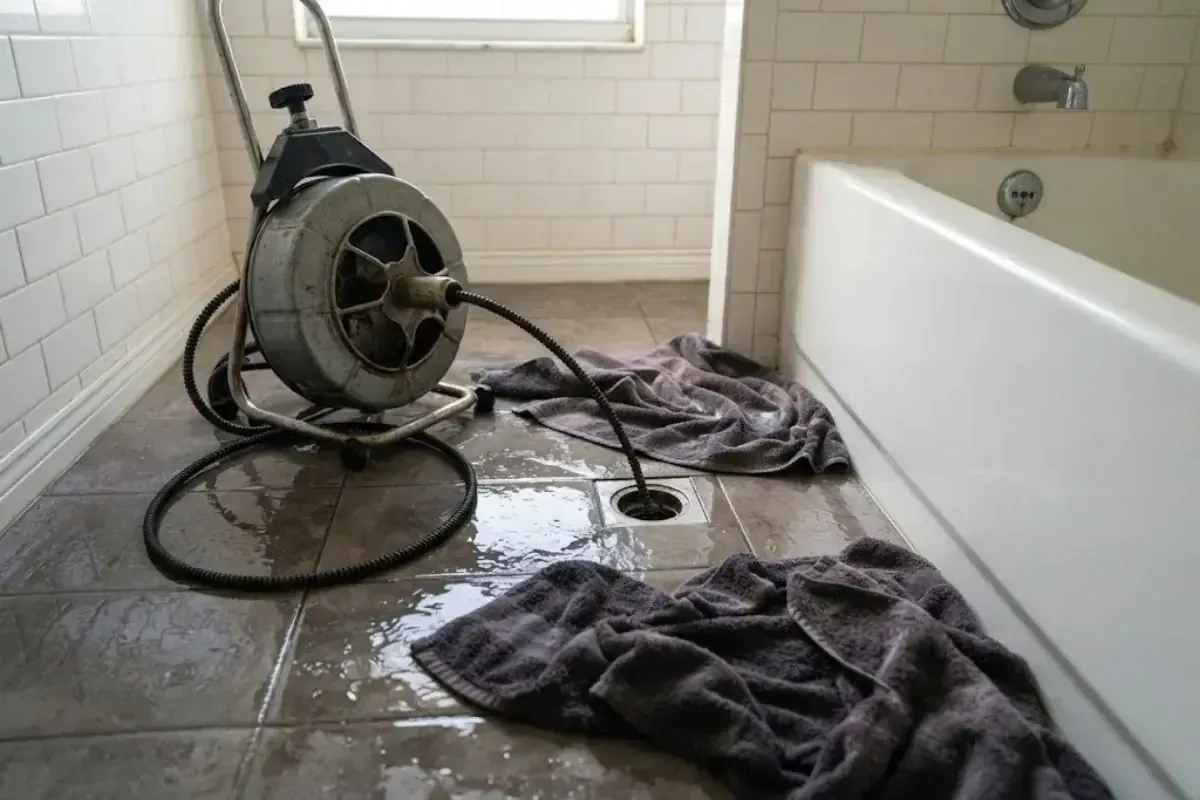
Confirm it is the main line
A main line clog affects every fixture that drains through it. The tell is a pattern. The toilet gurgles when the washer drains. The lowest drain in the house, such as a floor drain, a tub or a ground-floor shower, backs up first. Several fixtures drain slowly at once.
A single slow sink is a different story, and it points to a branch line. Our guide to drain cleaning covers those cases.
If you see sewage rising, treat it as urgent. Stop using water and call a plumber.
Safe first steps
These steps limit damage while you arrange help.
- Stop using water. No flushing, laundry or dishwasher.
- Find the cleanout cap in the yard and leave it closed unless a plumber asks you to open it.
- Move belongings off floors near affected drains.
- Wear gloves and boots if you must walk through wastewater, and wash up afterward.
- Photograph the backup and the damage for insurance.
- Call a plumber and describe which fixtures are affected.
Skip chemical drain cleaners. In a fully blocked line they just add a hazard.
What commonly causes a main line clog
The cause shapes the fix.
| Cause | Signs | Typical remedy |
|---|---|---|
| Tree roots | Repeated clogs, backs up after rain | Cut roots, then jet, then repair the joint |
| Grease and scale | Slow decline over months | Jetting |
| Wipes and paper | Sudden backup after use | Cable, then a camera check |
| Collapsed or offset pipe | Clogs that return soon after cleaning | Repair or replacement |
| Low spot, or a belly | Water sits in the pipe, slow drains | Replace the sagging section |
A single event, such as a wad of wipes, is cleared and forgotten. A pattern means the line has a defect, and the camera shows it.
How a plumber clears it
A plumber opens the cleanout and runs a cable machine with a cutting head through the line, breaking up roots and debris. For buildup on the pipe wall, a water jet, as described on our hydro jetting page, cleans the pipe more thoroughly.
A camera pass afterward shows the pipe's condition. This is the step that separates a one-time clog from a defect. Ask for the footage.
If the camera shows damage, the plumber explains the options, such as a spot repair or lining, covered on our sewer line repair page.
Preventing the next one
Habits matter. Keep these in mind:
- Flush only toilet paper and human waste, even if a wipe says flushable.
- Keep grease out of drains. Let it cool, then put it in the trash.
- Use drain strainers in showers and sinks to catch hair and food.
- Know where your cleanout is, and keep the area clear.
- Consider a camera check if the line has clogged more than once.
- Watch large tree roots near the sewer path.
A line that has had roots once will likely have them again, so a periodic jetting can be cheaper than an emergency.
What to expect after the line is cleared
When a plumber clears the main line, water usually drains right away and the gurgling stops. That is the moment most people relax, but it is also the moment to ask what caused the clog. A one-time blockage from a wad of paper needs no follow-up, while roots or a sagging pipe will bring the problem back.
Ask whether a camera pass is part of the visit. Footage shows the condition of the pipe after the blockage is gone, and it gives you a record you can compare against in a year. It also tells you whether a scheduled cleaning makes sense or whether a repair is the better plan.
For the next few days, run water normally and watch the lowest drain in the house. If it slows again within a week, call back and say so. A quick return of the symptoms is useful information for the plumber and usually points to something the first visit uncovered but did not remove.
Finally, tell everyone in the house what happened. Many main line clogs start with a habit, such as flushing wipes or rinsing grease, and a short conversation can prevent the next call.
If several drains are slow right now, call (321) 463-9969 and say which fixture backs up first.
What to do and what not to do during a backup
These dos and don'ts apply while the main line is blocked:
- Do stop using water at every fixture and tell everyone in the house.
- Do keep people and pets out of any area with standing sewage.
- Do not pour chemical drain opener into a blocked main line.
- Do not use a plunger on a toilet that is backing up from the main.
Saint Cloud local note: housing age, rain and permits
A state historical marker records that Saint Cloud was founded in 1909 as a community for Union veterans and incorporated in 1911, so homes here come from many eras. Older laterals may be clay or cast iron and newer ones plastic. The camera shows which you have.
A cleaning visit needs no permit, because the county permit page exempts clearing sewer blockages. A repair that replaces pipe may count as re-piping, which does need one, so ask the building department for your address.
Where this comes from: a Florida state historical marker and the county permit information page. Main line clearing is offered in Kissimmee and Harmony too.
Quick answers for Saint Cloud homeowners
Where is my sewer cleanout?
Look for a capped pipe near the foundation or at the property line. It is usually white or black plastic, and the cap unscrews.
Is sewage backup covered by insurance?
Often only with a water backup endorsement. Check your policy and photograph the damage.
How long does clearing a main line take?
Often an hour or two for a standard clog. Roots or a camera pass can add time.
Does clearing a main sewer line need a permit in Osceola County?
The county's permit page lists clearing sewer blockages as not requiring a permit.
Why does my main line clog every few months?
A recurring clog usually means roots, scale or a pipe defect. A camera inspection shows the cause.