
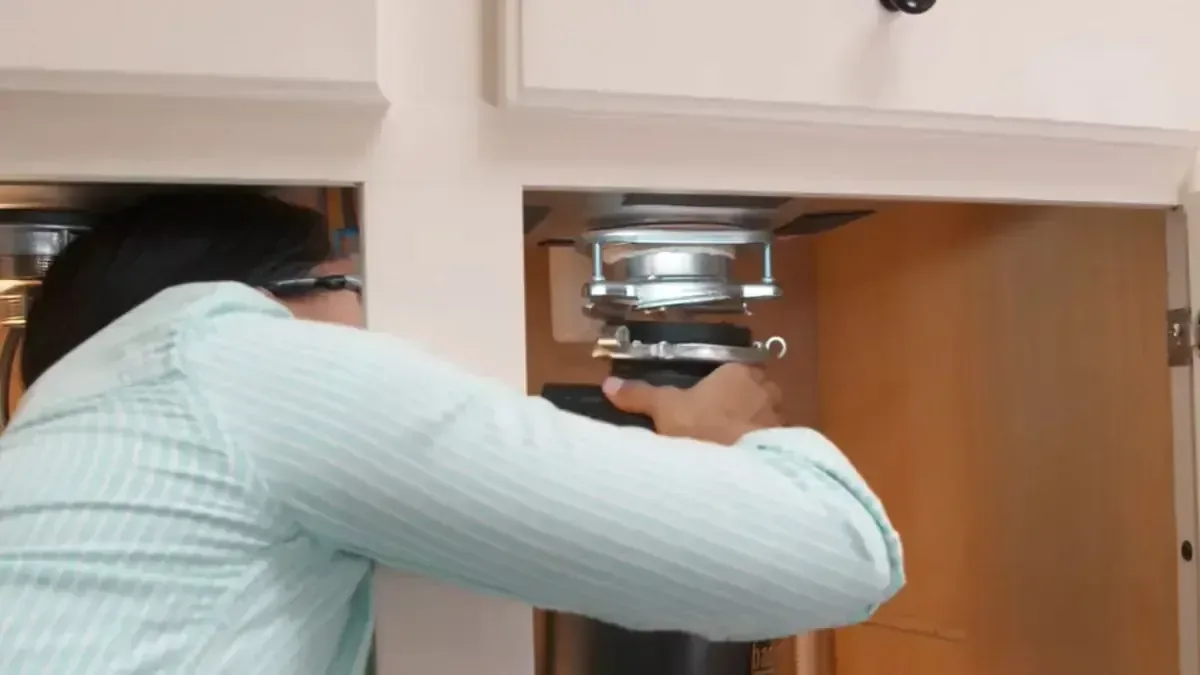
So, how hard is it really?
If you are replacing an existing disposal with the same brand and a matching mount, the job is a few hours of careful work. If you are adding a disposal where there was none, or switching brands with a different mounting system, it gets harder.
The mechanical steps are straightforward. The risks are small, and they matter. A missed dishwasher plug, a loose flange or an unsafe wire connection can cause a leak, a clogged dishwasher or an electrical hazard.
Read this guide as a way to decide whether to do it yourself or hand it to a plumber. Either choice is reasonable once you know what is involved.
What you need before you start
Gather everything first so the sink is not out of use for long:
- The new disposal, with its mounting hardware and power cord kit if needed.
- Plumber's putty and a screwdriver set.
- A pair of channel-lock pliers and a bucket for water in the trap.
- A hex key that fits the disposal's flywheel socket.
- A way to switch off power at the breaker, and a voltage tester.
- A hose clamp or a replacement dishwasher hose if the old one is worn.
Check the horsepower. A third-horsepower unit handles light use, and a half or three-quarter horsepower unit suits a busy kitchen better.
The installation steps
These apply to a typical replacement. Always read the manual for your unit.
- Turn off power at the breaker and confirm with a tester that the circuit is dead.
- Place a bucket under the trap and disconnect the discharge pipe and the dishwasher hose from the old disposal.
- Release the old disposal from its mount by rotating the ring, lower it and disconnect the wires.
- Remove the old mounting assembly and clean the sink opening.
- Set the new flange with plumber's putty, attach the mount and tighten it evenly.
- Knock out the dishwasher plug inside the new disposal if a dishwasher will connect to it.
- Hang the disposal on the mount, connect the wires and reattach the discharge and dishwasher hose.
- Run water, check for leaks, then switch on power and test.
The dishwasher knockout plug is a thin disc inside the inlet. If you forget to remove it, the dishwasher cannot drain, and you will find out the first time you run a cycle.
DIY or hire a plumber
Use this to decide.
| Situation | DIY is reasonable | Hire a plumber |
|---|---|---|
| Same brand swap, power cord plug-in | Yes, with care | Optional |
| Brand change with a new mount | Possible | Easier with one |
| No existing disposal | Harder | Yes, wiring and a switch are needed |
| Hardwired power with no switch | No | Yes, electrical work |
| Leaky sink or old trap lines | Possible | Yes, plumbing changes |
A new disposal can also reveal old trap or drain problems. If the sink drains slowly after installation, the trap or the branch line may need drain cleaning.
What not to put in a disposal after the install
A new disposal is not a trash can. Grease, fibrous foods such as celery and corn husks, bones, coffee grounds in large amounts and starchy foods that swell, such as pasta and rice, all lead to clogs. Run cold water before, during and after grinding for about fifteen seconds so fats flush through.
A disposal also adds solids to your drain system. In a home on septic, ask before adding one, because the added solids can shorten the time between pump-outs.
When a new disposal turns out to be a bigger job
Sometimes a swap reveals more. The sink flange may be cracked, the trap arm may be too short for the new unit or the cabinet may have water damage from an old leak. A pipe that has been leaking quietly for months is common behind a disposal.
If you find a leak you cannot trace, a plumber can help, and our faucet repair page covers the other under-sink fixture that often needs attention at the same time.
For a disposal that needs new wiring or a rebuilt drain connection, call (321) 463-9969 and describe the sink setup.
Saint Cloud local note: permits and licensing
The county permit page puts new and replacement fixtures on the permit-required list and swapping a faucet without rerouting on the other. A disposal is in neither list, so call the building department for your address and ask whether your swap needs a permit.
That page also says regulated trades such as plumbing must be done by licensed subcontractors, even when an owner acts as the builder. If the job adds wiring or changes the plumbing, hire a licensed plumber and check the license at myfloridalicense.com.
Where this comes from, according to the pages themselves: the county permit information and building office pages. If you live in Kissimmee or Harmony, we install disposals there too.
Quick answers for Saint Cloud homeowners
Do I need a permit to swap a garbage disposal in Osceola County?
The county's permit page does not name disposals. It does list replacement fixtures as permit-required, so ask the building department that covers your address.
Can I connect a dishwasher to the disposal?
Yes. Remove the knockout plug inside the disposal, attach the dishwasher hose and use a high loop or an air gap so sink water cannot flow back into the dishwasher.
How long does the job take?
A same-brand swap often takes a couple of hours. A new installation with wiring takes longer.
Why is my new disposal leaking?
A loose mount, a missing gasket or a flange sealed without enough putty is the usual cause. Tighten the mount evenly and check the discharge connection.
What if the old disposal is hardwired?
Hardwired units need a safe electrical connection. If you are not comfortable working with wiring, a licensed professional should do it.