What commercial plumbing covers
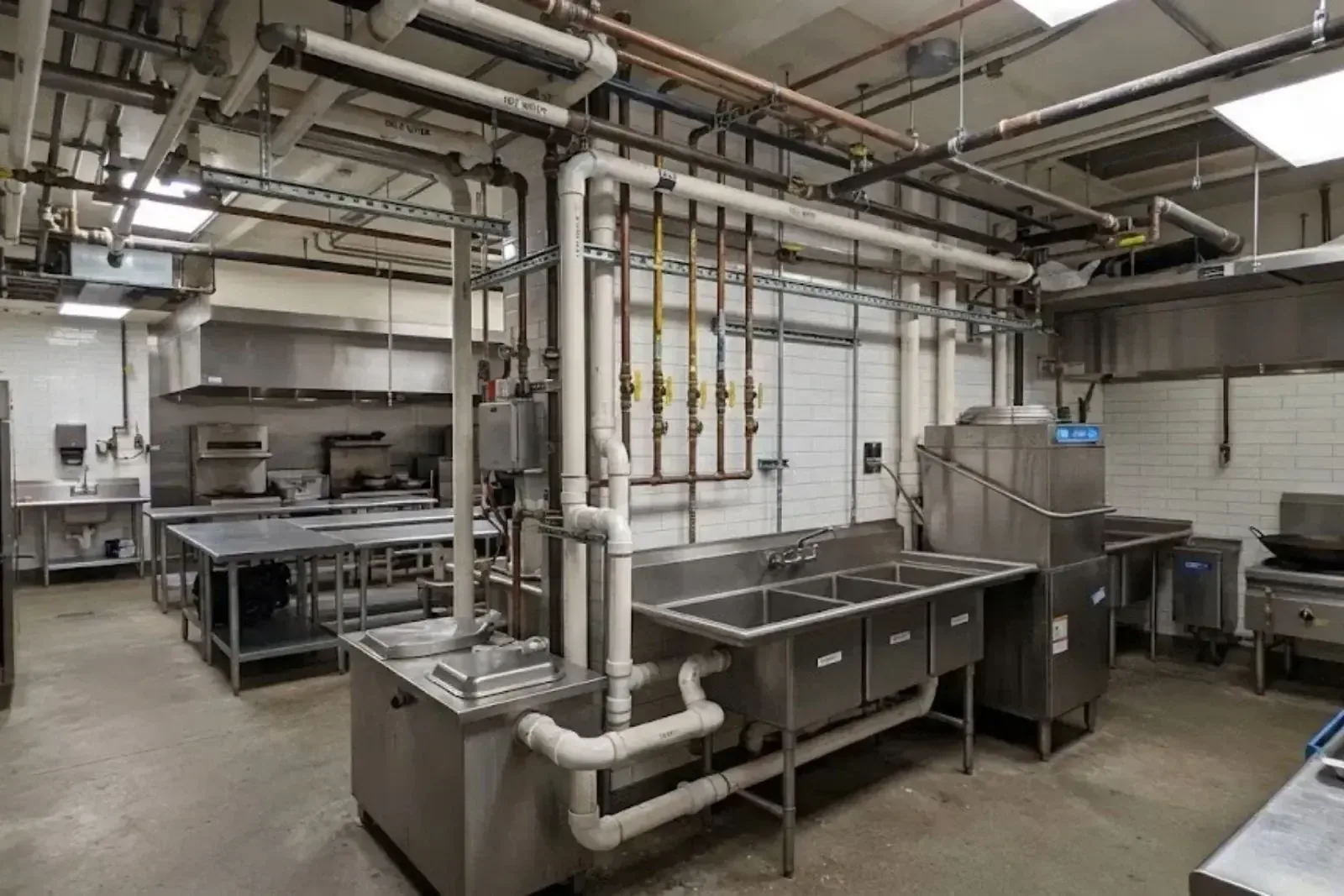
Commercial plumbing is the repair, maintenance and installation of plumbing in restaurants, offices, retail stores, warehouses, medical suites and multifamily buildings. The pipes are larger, the fixtures more numerous and the loads heavier than in a house.
A commercial job also brings scheduling pressure. Water that cannot run means a restaurant cannot serve and a clinic cannot operate, so response and a clear price matter.
After-hours emergencies for businesses
Call at any hour if a main line is backed up, if a water line has burst, if a floor drain is overflowing or if a water heater has failed in a food service or care setting. The line is answered 24/7, including nights, weekends and holidays.
Shut off water to the affected area or the building main, stop using fixtures that drain to the blocked line and keep staff and customers off wet floors. If wastewater is involved, close the area until it has been cleaned and disinfected.
Same-day service is offered when available, and a price is stated before work begins. Tell the dispatcher your hours so the plumber plans around them.
Common commercial plumbing needs
These are the calls we see most often.
| Need | Typical cause | Response |
|---|---|---|
| Kitchen drain backup | Grease and food solids | Hydro jetting and a camera pass |
| Floor drain overflow | Debris, trap or main line blockage | Cable or jet, then trap check |
| Restroom backup | Paper, wipes, flushable products | Auger the fixture, check the line |
| Water heater failure | Age, scale, heat exchanger failure | Replace or repair |
| Burst or leaking line | Corrosion, pressure, impact | Isolate and repair |
Grease traps, backflow and storm drains
Restaurants and food businesses use grease traps or interceptors to catch fats, oils and grease before they enter the sewer. A trap that is full stops catching fat and can push it downstream. Pumping on a schedule keeps the trap working, and a plumber can set a schedule based on the kitchen's volume. Check the requirement with your local utility or city.
Backflow assemblies protect the public water supply by keeping used water from flowing backward into it. Many utilities require periodic testing of these devices on commercial and irrigation connections, so ask Toho Water Authority or the city what applies to your property.
Storm drains on a commercial lot also need attention. Catch basins on private property collect leaves, sand and trash, and a clogged inlet floods a parking lot during a summer storm. Public storm inlets belong to the city or county, so report blocked public inlets to the agency that maintains the road.
Cast iron and older buildings
Older commercial buildings in the original Saint Cloud grid and along the main corridors may have cast iron drain pipe. Cast iron lasts for decades, but it corrodes from the inside and eventually cracks or collapses. A camera pass shows its condition, and repair options include spot replacement and lining. See our sewer repair page for the options.
What decides the price of commercial plumbing
We give a written price before work starts:
- Scope. A single fixture is smaller than a main line replacement.
- Time of day. Overnight, weekend and holiday dispatch can be priced differently.
- Access. Ceilings, mezzanines and slab cuts change the labor.
- Permit. Larger jobs may require permits and inspections.
- Downtime. Phasing work to keep a business open affects the schedule.
A business insurance policy may cover sudden water damage and sometimes lost income, so ask your agent. To discuss your building, call (321) 463-9969.
Leak detection in commercial buildings
Commercial leaks are harder to find than home leaks because the piping is longer, more of it is hidden and several tenants may share it. A restaurant, a strip of shops or a small office building can lose water for a long time before a bill reveals it.
We take these calls, and we are honest about the limits. A large building may need a leak survey, a conversation with the property manager and sometimes a specialist for fire lines or irrigation. A first visit can confirm whether the loss is on the plumbing side and narrow the search.
Commercial rules to know
Business plumbing follows the standards in the Florida Building Code, Plumbing, and food service sites also face local rules on fats, oils and grease. Cross-connection control, including backflow prevention, is covered by Florida Administrative Code Chapter 62-555.
What to do before the plumber reaches your business
A few steps protect customers and staff while a commercial plumbing problem is open:
- Block off wet floors and post a warning sign so no one slips.
- Stop using affected sinks, floor drains and restrooms if sewage is backing up.
- Close the main shutoff valve if water is spraying, and tell the dispatcher where it is.
- Move stock, paperwork and electronics away from water, and keep power off near wet outlets.
Tell the dispatcher when the business is open and who can give access. If you smell gas, evacuate and call the gas utility or 911 first.
Where we serve businesses
We handle commercial calls along Neptune Road and the other Saint Cloud corridors, in Kissimmee and in Harmony. See our Kissimmee page for that side of the lake.
Questions we hear from Saint Cloud callers
Do you handle commercial plumbing emergencies at night or on weekends in Saint Cloud?
Yes. The line is answered 24 hours a day, every day. A dispatcher books the first open appointment for a backup, burst line or failed heater, and tells you when to expect the plumber.
Do you service restaurants?
Yes. Grease-related drain problems, floor drains, dish machine connections and water heater issues are common. A scheduled grease trap routine helps avoid emergencies.
What is backflow testing?
It is an annual or periodic check that a backflow assembly is working. Many utilities require it for commercial and irrigation connections, so ask Toho Water Authority or the city what applies.
Can work be done after business hours so we stay open?
Often yes. Tell the dispatcher your hours and the plumber plans around them. After-hours work may be priced differently, and we tell you before work starts.
Do you work on multifamily buildings?
Yes. Shared stacks, water heaters and main lines are common calls. A camera pass and a clear price come first.