
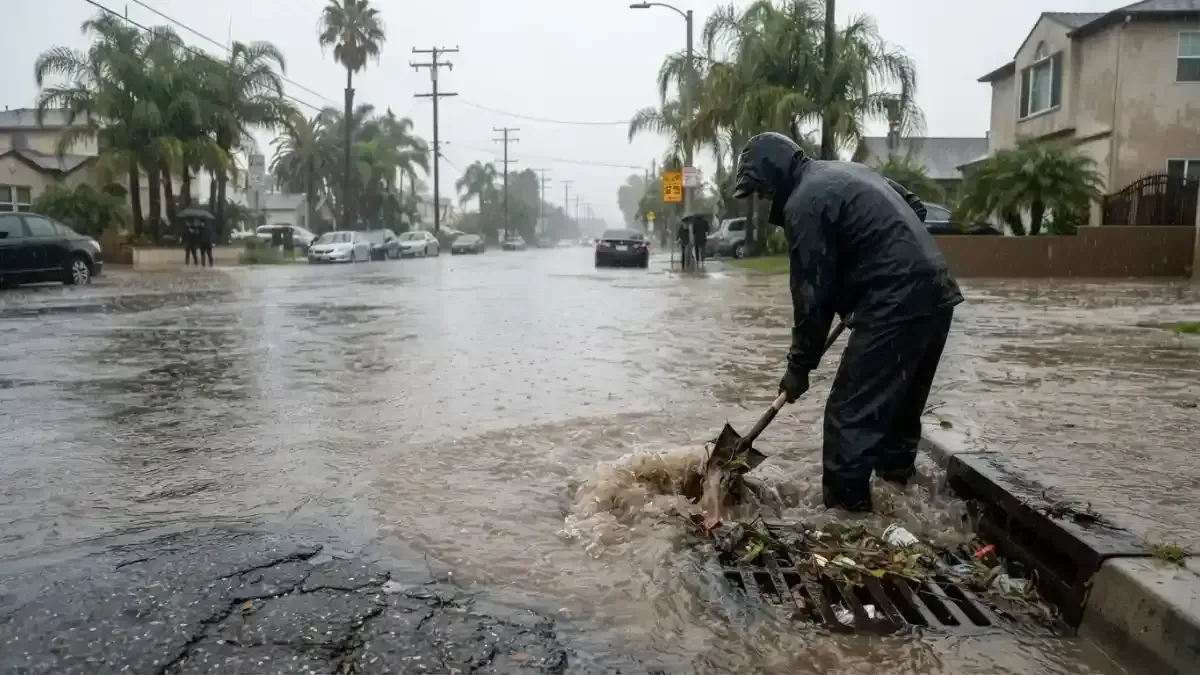
Storm drain versus sewer
A storm drain carries rainwater from streets, roofs and parking lots to ponds, ditches or waterways. A sanitary sewer carries wastewater from sinks and toilets to a treatment plant. They are separate systems, and they are not supposed to mix.
Only rain belongs in a storm drain. Pouring paint, oil, pesticides or pet waste into one sends it to the nearest lake or pond without treatment.
Who is responsible for which drain
Ownership decides who cleans what:
- Public street inlets and the pipes under the road are maintained by the city or county.
- Catch basins, yard drains and area drains on your own lot are yours.
- Roof gutters and downspouts that tie into a yard drain are yours.
- In a gated or managed community, a homeowner association or a community development district may maintain common drains.
- A commercial lot's catch basins belong to the property owner or manager.
If you are unsure, call the city public works department or the county, and ask which agency maintains the drain at your address.
How to clear a drain you own
Work only in dry conditions and never put your hands where you cannot see.
- Wear gloves, boots and eye protection.
- Remove leaves, trash and debris from the grate by hand or with a rake.
- Lift the grate if it is designed to be removed, and scoop out sediment from the basin with a small shovel.
- Flush the drain with a garden hose and watch that the water leaves freely.
- If water does not drain, the pipe may be blocked or collapsed, and a plumber with a jetter or camera can find the cause.
- Bag the debris and throw it away. Do not wash it into the street.
Never enter a storm drain or a deep catch basin. Gases and low oxygen can be deadly in an enclosed space.
Common storm drain problems
These patterns come up most often.
| Problem | Likely cause | Fix |
|---|---|---|
| Water pools at the grate | Leaves and trash on the grate | Clear by hand |
| Basin is full of sand | Soil erosion from the yard | Scoop out, add ground cover |
| Drain slow after clearing | Roots or sediment in the pipe | Hydro jetting |
| Water backs up into the yard | Collapsed or crushed pipe | Camera inspection and repair |
| Standing water long after rain | Low spot or no outlet | Regrade, add a drain, ask a pro |
A jet or camera finds what a hose cannot. If the pipe itself is broken, repairs are covered under sewer line repair, since the methods are much the same.
Preparing for heavy Florida rain
Florida's summer wet season brings storms that can drop several inches in an hour. Drains that were fine in spring can overflow when leaves and sand have built up. Clear grates before a forecast storm, check that downspouts discharge away from the house and walk the lot to find where water collects.
After a big storm, check again. Debris may have washed into the basin and blocked the outlet. If water sits against the house, call a plumber or a drainage contractor, because standing water can damage the foundation and the slab.
A routine that keeps a drain ready
A storm drain that works in a light shower can still fail in a heavy one, so the best time to clean it is before the wet season builds. Walk the property after the first few storms of the season and watch where the water goes.
Look for the same warning signs each time. Water that pools for hours, a grate buried under leaves, a pipe outlet that has silted over or a low spot that was not there last year all point to a drain that needs attention. Catching them early keeps the job small.
Keep a short log with dates and photos. If a problem ever involves a neighbor or a public inlet, a record of what you did and when makes the conversation easier.
When a private drain on your lot will not clear, call (321) 463-9969 and tell the dispatcher what the water does in a storm.
Saint Cloud local note: lakes, public inlets and who to call
Saint Cloud sits on the south shore of East Lake Tohopekaliga, and much of its stormwater ends up in the lake and its surrounding waterways. That is a good reason to keep debris, fertilizer and chemicals out of storm drains. Clean the grate and bag the debris, because anything that washes in reaches the water.
We did not find a published City of Saint Cloud or Osceola County procedure for reporting a blocked public inlet. Call the city public works department or the county and ask which agency maintains the inlet at your address. A private drain on your lot is your responsibility.
Where this comes from, according to the pages themselves: a public encyclopedia entry on the lake setting, plus a stated gap where no official page was found. Storm drain questions from Kissimmee and Harmony are welcome too.
Quick answers for Saint Cloud homeowners
Who cleans the storm drain in front of my house?
Street inlets are usually maintained by the city or county. Call the public works department to confirm and to report a blocked inlet.
Can I pour anything down a storm drain?
No. Only rain belongs there. Anything else can pollute local lakes and waterways.
Is it safe to remove a storm drain grate?
Only if it is meant to be lifted and the area is dry and safe. Never enter the basin or the pipe.
Why does my yard flood even though the drain is clear?
The pipe may be blocked or collapsed, the yard may have low spots or the outlet may be too small. A camera inspection helps.
How often should I clean my yard drains?
Before the summer wet season, after major storms and whenever you see debris collecting.